
Weathering the Storm
By Jane Merrylees, Merrylees Architecture & Interiors
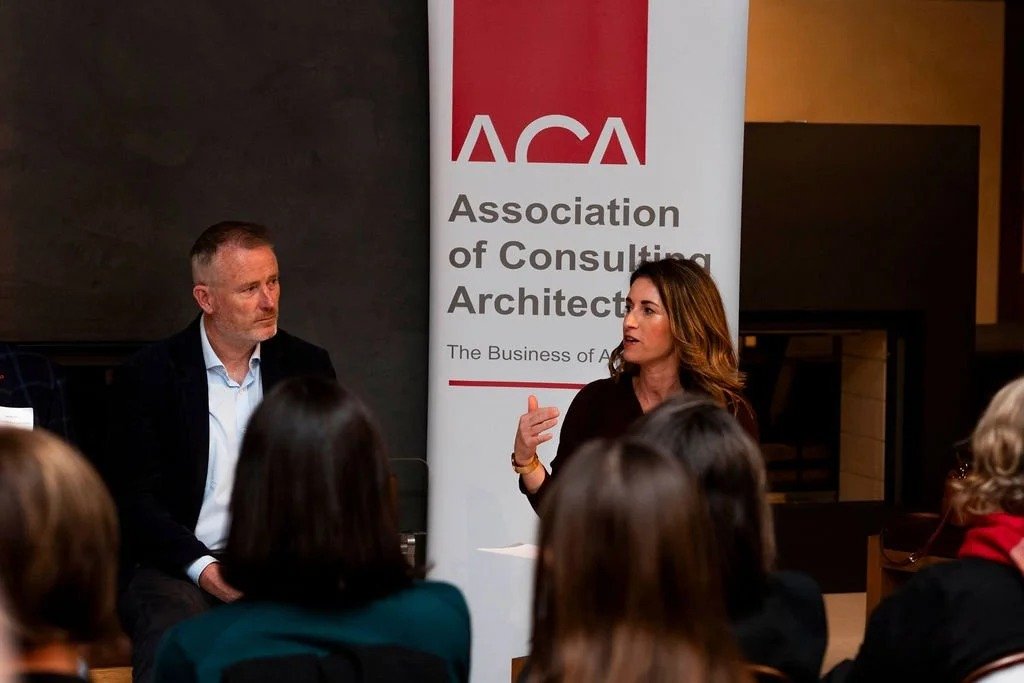
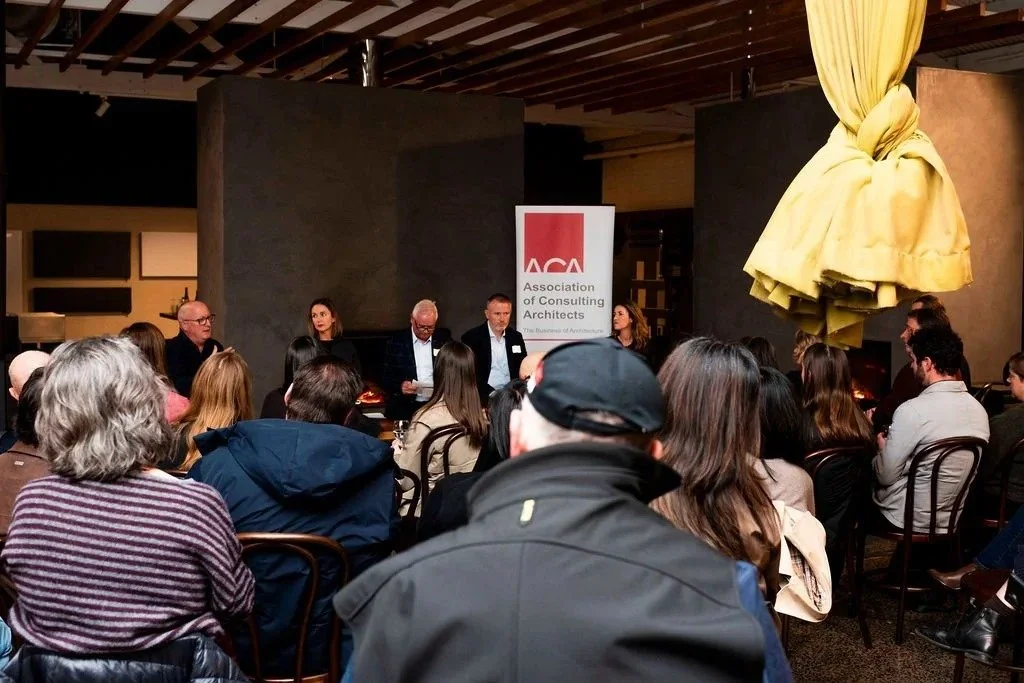
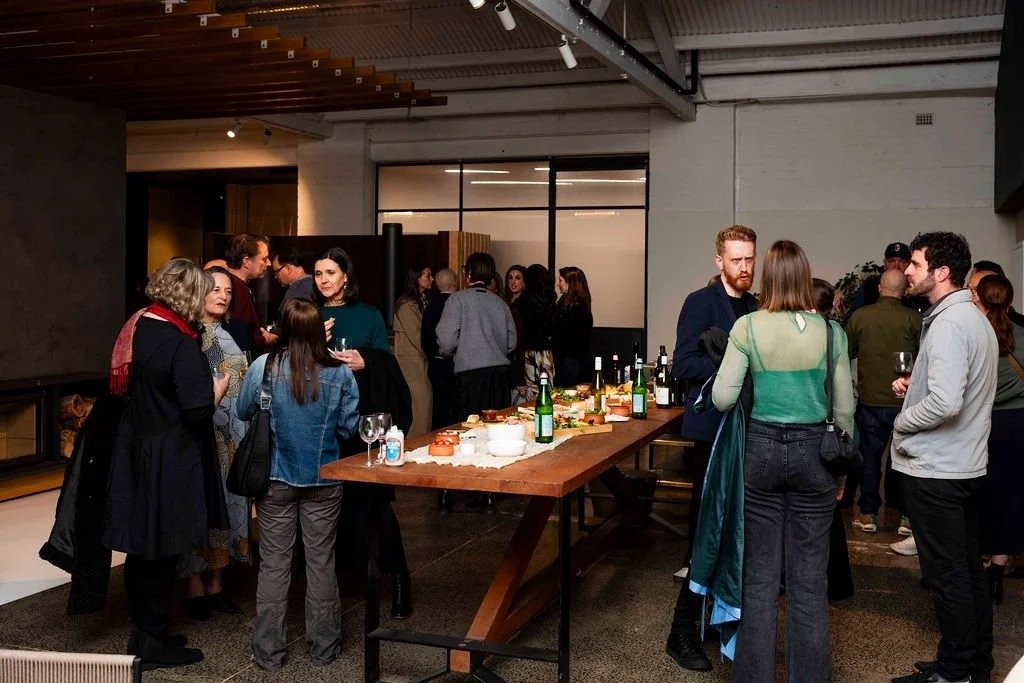
The Association of Consulting Architects Australia (ACA) Business of Small Practice (BoSP) committee is where some of the sharpest minds in the industry get together to talk honestly about the realities of running a practice, and I've been proud to sit on that committee in Victoria for a while now. Each quarter I'm involved in arranging, and sometimes presenting or moderating, our panel discussions, and this month's session at Oblica was one of the best turnouts we've had yet.
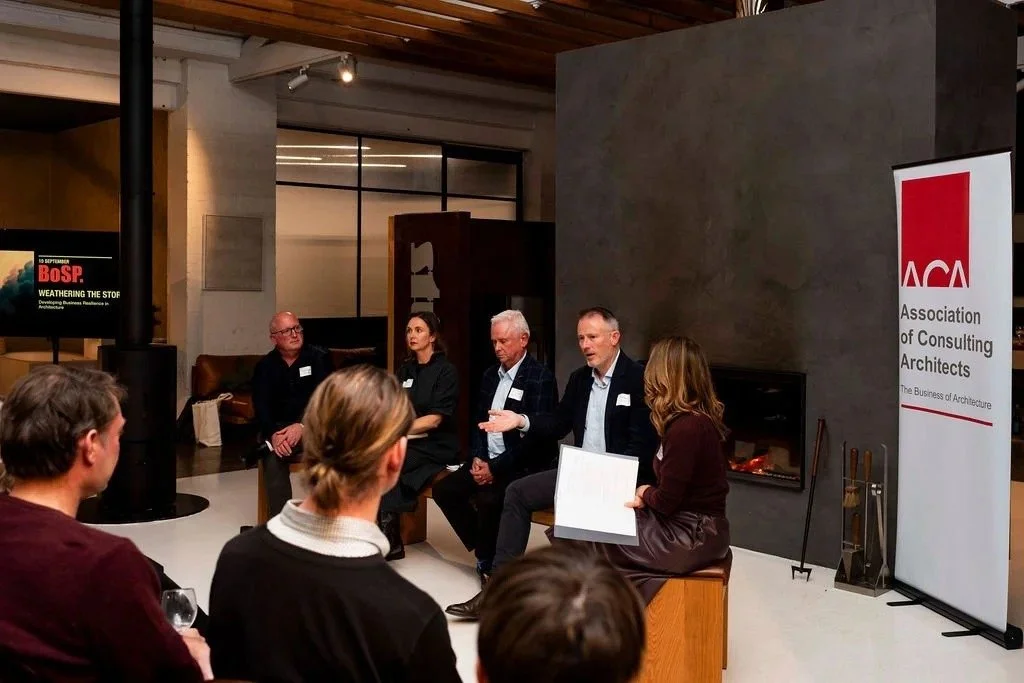
Richard and Sarah Bryant of Bryant Alsop Architects, Les Finnis of Finnis Architecture and Interiors, and Keith Ryan, Executive Director Victoria at the Housing Industry Association, all sat down with me to talk honestly about where the architecture market actually is right now. The version practice owners live in every day, not the one you see on glossy websites and Instagram posts.
I'll be honest, I went in expecting a fairly heavy hour. Building costs, interest rates, the general sense everyone's been holding their breath through this year. But it turned into one of the more useful, and hopeful, conversations I've had in a while. So I wanted to share some of the takeaways here, because I think they're just as relevant if you're a client planning your own project as they are for architects running a practice.
Is the market as bad as it feels?
It depends who you ask, honestly. A few of the group are as busy as they've ever been. Others are really feeling it. Les has run his practice for close to four decades and said this current climate feels like death by 1000 cuts. Just when things seem like they'll pick up, another setback comes along. Since Covid, it's felt like a rollercoaster of peaks and troughs with little consistency or predictability.
Richard made a point I hadn't quite put into words myself, that a lot of the hesitancy we're seeing isn't really about the market itself, it's about the story being told about the market. Headlines about rising construction costs make clients nervous long before they've actually looked at their own numbers.
Sarah agreed, and pointed out that in her 18 years running Bryant Alsop, when has it ever been smooth sailing for architects? She's always worried about where the next project is coming from, but in the end things tend to land just in time. What everyone agreed on is that the clients moving ahead at the moment tend to be the ones who understand exactly what they're paying for, and why. I think confidence comes from that kind of clarity, not from picking the right moment. Once you know what you actually need and why, there's genuinely never a wrong time to start.
Keith made a point that stuck with me. Building approvals move in cycles, they always have, and the businesses that come out the other side well are the ones who keep doing good work through the quiet periods, not just the busy ones. He'd add it's not all doom on the construction side either, with less work around, some trades have actually become more competitive on price and availability. It's a fairly simple idea, but I think it's true of most things, not just the building and design industry.
A quieter market works in the client's favour
This is an insight I found genuinely useful, and I don't think enough people talk about it. When things slow down, the trades and consultants we work with have more time for each project. Quotes come back faster. Site visits happen sooner. Directors lean into every project. There's less of the scramble you get in a hot market, where good people are stretched across too many jobs to give any one of them proper attention.
Les made a similar point about clients. Some of his best projects have come out of quieter years, because the people who commit during that time are usually doing it for the right reasons, not because everyone else is. They've had time to actually think it through.
Making the value visible
One thread that ran right through the evening was that clients aren't always pushing back on fees, they're often just unclear on what they're actually paying for. Les talked about putting together a simple booklet for clients that spells out, plainly, what an architect does versus a designer versus a builder. It's not complicated, but it does a lot of work in shifting the conversation away from price alone and towards the value of good advice, good documentation and someone managing risk on your behalf.
Sarah spoke about something similar from a different angle, a select services model at Bryant Alsop that gives clients access to proper architectural input at a smaller scale, for the parts of a project where a full service isn't the right fit. It's a good reminder that adapting doesn't have to mean doing less, sometimes it means offering the right amount for what the client actually needs.
What actually makes a project run smoothly
This was the part of the evening I found myself nodding along to the most, because it lines up almost exactly with what I tell clients from our very first meeting.
Be honest about the budget from day one. Not roughly honest, actually honest. Richard and Sarah talked about how much smoother a project runs when the budget and the brief are aligned before design progresses, rather than discovering the gap six months in.
Know how much your projects cost to build, and bring in a quantity surveyor early if you need to. Les made the point that clients who've had realistic cost guidance from the start rarely get a shock later, which saves everyone time, money and a fair bit of heartache.
Have great systems in your studio, so the process stays efficient and smooth under pressure. Use a quieter period to refine those, upskill the team, and be ready for when things pick up.
Effective communication and trust are essential. Stay in touch properly, an actual phone call, a site visit, not just an email chain. Every architect on that panel agreed that the projects which stall are rarely the ones with a difficult site or a complicated brief. They're the ones where communication broke down somewhere along the way.
Building for what comes next
The thing I keep coming back to from our evening is that none of these architects were talking about riding out a storm. They were talking about building practices, and building homes, that hold up well beyond whatever the market happens to be doing this particular year.
That's really how I think about the work we do here. A project isn't a reaction to interest rates or a tough economy. It's a long term investment, and something a family will live in and enjoy for decades. If we get the basics right, an honest budget, proper communication, the parts of the process that aren't glamorous but matter most, it doesn't much matter what the headlines are saying the week we start.
A few questions I get asked a lot
Is now a good time to start a renovation or new build?
If you're working with a team you trust and your budget is realistic, it's a definite yes. Some of the best projects I've worked on started in quieter years. Construction prices don't tend to go down, so there's no real advantage in waiting, it's only likely to cost more and take longer the longer you leave it.
Will a slower market mean my project takes longer?
Usually the opposite. Both the design team, that's us, and the builders often have more capacity, which can mean faster turnarounds on quotes and construction programs.
How do I know I'm getting good value, not just a good price?
Ask what's actually included, and what risk is being managed on your behalf. A good architect isn't just drawing a nice looking house, they're coordinating consultants, managing documentation, and making sure what gets built matches what you agreed to. That's worth understanding early, not assuming later.
What's the one thing that most affects whether a project runs smoothly?
An honest budget conversation from day one, and trust in your team to do their job well and in your best interests. Almost every delay I've seen traces back to one of those two things.
About Merrylees Architecture
Merrylees Architecture & Interiors is a boutique residential studio based in Brighton, working with homeowners across Brighton, Toorak, Elsternwick, Hampton, Malvern, Camberwell, East Melbourne, Albert Park and the Mornington Peninsula. Jane Merrylees sits on the ACA Vic Business of Small Practice committee. Get in touch at merryleesarchitecture.com.